Dynamics 365 Finance and Operations Autonomous Agents – A Deep-Dive

Introduction

Finance and Operations (F&O) functions are the backbone of enterprise performance. They ensure that procurement, accounting, project management, expense handling, and operational monitoring run smoothly. Yet, these areas are often burdened with repetitive manual tasks, compliance risks, and inefficiencies.

Microsoft’s Dynamics 365 Finance and Operations Autonomous Agents are designed to address these challenges. By embedding AI-driven automation into core workflows, these agents free finance and operations teams to focus on strategic decision-making rather than routine administration.

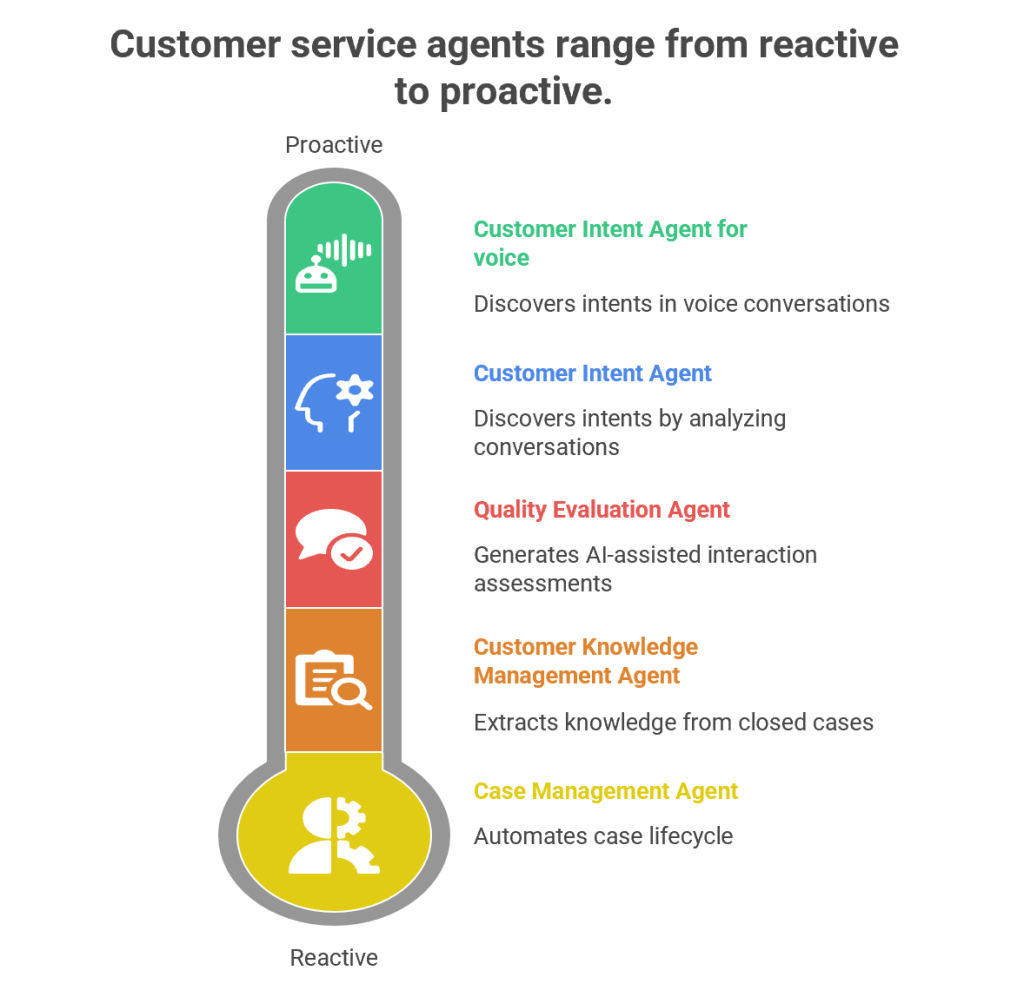
1. Supplier Communication Agent

Purpose

Procurement teams spend significant time chasing suppliers for confirmations, updates, and changes. The Supplier Communication Agent automates these interactions, ensuring real-time visibility and freeing teams for strategic work.

How It Works

  • Automated Follow-Ups: Sends reminders to suppliers for pending confirmations.
  • Workflow Updates: Applies supplier changes directly to purchase orders.
  • Exception Escalation: Flags anomalies (e.g., delivery delays, pricing mismatches) for human review.
  • Real-Time Visibility: Updates dashboards with supplier responses.

Business Value

  • Reduces manual communication overhead.
  • Improves supplier relationship management.
  • Enhances procurement efficiency.
  • Provides transparency across supply chains.

Example

A manufacturing company issues 1,000 purchase orders monthly. The agent autonomously follows up with suppliers, applies changes to delivery dates, and escalates exceptions. Procurement managers focus on strategic sourcing rather than chasing confirmations.

2. Account Reconciliation Agent

Purpose

Financial reconciliation is critical but often tedious. The Account Reconciliation Agent automates ledger-to-subledger reconciliation, identifies exceptions, and suggests resolutions.

How It Works

  • Automated Matching: Compares ledger entries with subledger transactions.
  • Exception Identification: Flags mismatches (e.g., missing invoices, duplicate entries).
  • Resolution Suggestions: Provides corrective actions (e.g., adjusting entries).
  • Audit Trail: Maintains transparent logs for compliance.

Business Value

  • Accelerates financial closings.
  • Improves accuracy in reporting.
  • Reduces audit risks.
  • Frees accountants for strategic analysis.

Example

During month-end close, the agent reconciles thousands of transactions overnight, identifies 50 mismatches, and suggests corrections. Finance teams review exceptions instead of manually reconciling every entry.

3. Time Agent

Purpose

Manual time entry is error-prone and inefficient. The Time Agent generates time entries from project bookings, calendars, and Outlook meetings.

How It Works

  • Data Extraction: Pulls project schedules and meeting logs.
  • Time Entry Generation: Creates entries automatically in Dynamics 365.
  • Error Reduction: Eliminates manual input mistakes.
  • Compliance Tracking: Ensures accurate revenue recognition.

Business Value

  • Saves employees time.
  • Improves billing accuracy.
  • Enhances compliance with project accounting standards.
  • Provides real-time visibility into resource utilization.

Example

A consulting firm’s employees spend hours logging time weekly. The agent automatically generates entries from Outlook calendars and project bookings, reducing errors and ensuring accurate client billing.

4. Expense Agent

Purpose

Expense management is often bogged down by manual receipt processing and policy enforcement. The Expense Agent automates this process.

How It Works

  • Receipt Extraction: Reads data from emails or images.
  • Policy Checks: Validates expenses against company rules.
  • Grouping Logic: Organizes reports by travel or project.
  • Compliance Enforcement: Flags violations for review.

Business Value

  • Accelerates reimbursements.
  • Ensures compliance with travel and expense policies.
  • Reduces fraud risk.
  • Improves employee satisfaction.

Example

An employee submits receipts via email. The agent extracts data, applies policy checks (e.g., meal limits, travel allowances), groups expenses by trip, and processes reimbursement automatically.

5. Approval Management Agent

Purpose

Approvals are critical but often slow. The Approval Management Agent streamlines this process by reviewing submissions against policy rules.

How It Works

  • Policy Validation: Checks entries against organizational rules.
  • Risk Classification: Flags high-risk items.
  • Routing: Sends flagged items to managers for review.
  • Efficiency: Automates approvals for compliant entries.

Business Value

  • Speeds up approval cycles.
  • Improves accuracy in compliance.
  • Reduces bottlenecks in workflows.
  • Enhances employee productivity.

Example

An expense report is submitted. The agent validates it against policy, approves compliant items instantly, and routes flagged entries (e.g., exceeding travel allowance) to managers.

6. Scheduling Operations Agent

Purpose

Resource scheduling is complex, requiring consideration of skillsets, travel time, and commitments. The Scheduling Operations Agent optimizes technician schedules.

How It Works

  • Skill Matching: Assigns tasks based on technician expertise.
  • Travel Optimization: Minimizes travel time between jobs.
  • Commitment Tracking: Ensures customer appointments are honored.
  • Dynamic Adjustments: Re-optimizes schedules in real time.

Business Value

  • Improves resource utilization.
  • Enhances customer satisfaction.
  • Reduces operational costs.
  • Provides agility in service delivery.

Example

A field service company manages hundreds of technicians. The agent optimizes schedules daily, ensuring the right technician is assigned to the right job, reducing travel time, and improving customer satisfaction.

7. Batch Monitoring Agent

Purpose

Batch processes are critical in finance and supply chain systems. The Batch Monitoring Agent provides AI-powered monitoring and diagnostics.

How It Works

  • Failure Detection: Identifies runtime anomalies and failures.
  • Throttling Alerts: Flags performance bottlenecks.
  • Diagnostics: Provides root cause analysis.
  • Operational Visibility: Updates dashboards with batch health.

Business Value

  • Ensures smooth batch execution.
  • Reduces downtime in financial and supply chain operations.
  • Improves IT administrator efficiency.
  • Enhances system reliability.

Example

During nightly batch runs, the agent detects throttling in invoice processing, alerts IT administrators, and suggests corrective actions. This prevents delays in financial reporting.

Synergy Between Agents

Together, these agents create a self-optimizing Finance and Operations ecosystem:

  • Supplier Communication Agent ensures procurement efficiency.
  • Account Reconciliation Agent accelerates financial closings.
  • Time and Expense Agents streamline project accounting.
  • Approval Management Agent enforces compliance.
  • Scheduling Operations Agent optimizes resource allocation.
  • Batch Monitoring Agent ensures system reliability.

Strategic Impact

Operational Efficiency : Agents automate repetitive tasks, freeing teams for strategic work.

Compliance : Automated checks reduce regulatory risks.

Accuracy : AI-driven validation improves financial integrity.

Scalability : Organizations can handle larger volumes of transactions without expanding headcount.

Conclusion

Dynamics 365 Finance and Operations Autonomous Agents represent a paradigm shift in enterprise management. By embedding AI into procurement, accounting, project management, expense handling, and system monitoring, they empower organizations to achieve greater efficiency, compliance, and scalability.
Dynamics 365 Sales Autonomous Agents – A Deep-Dive

Introduction

Sales organizations today face increasing complexity: fragmented customer journeys, rising expectations for personalization, and the need to close deals faster in competitive markets. Microsoft’s Dynamics 365 Sales Autonomous Agents are designed to address these challenges by embedding generative AI and automation directly into the sales lifecycle.

These agents act as digital colleagues, autonomously handling repetitive tasks, researching opportunities, qualifying leads, and even engaging customers. By doing so, they free human sellers to focus on relationship-building and strategic deal closure.

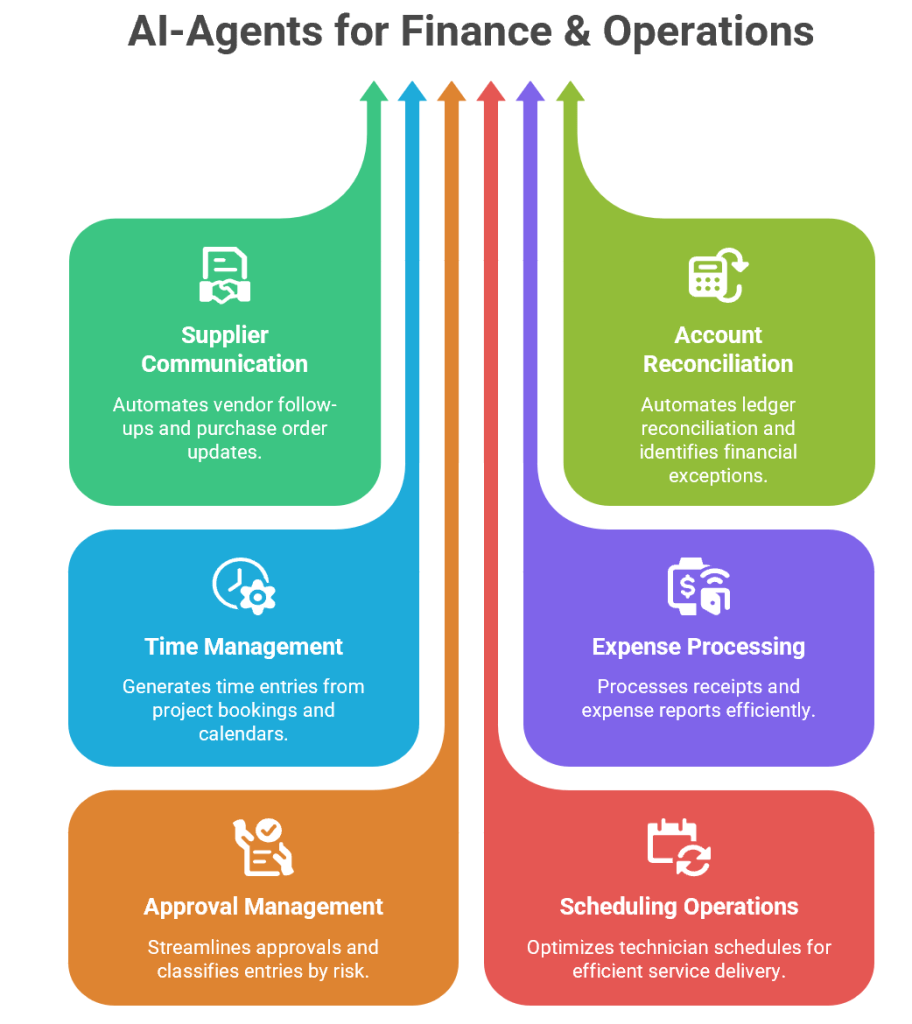
1. Sales Qualification Agent

Purpose

The Sales Qualification Agent helps sales teams qualify leads effortlessly by autonomously researching prospects, determining fit, and initiating outreach. Lead qualification is traditionally time-consuming, requiring sellers to manually gather data, assess potential, and decide whether to pursue.

How It Works

  • Data Aggregation: Pulls information from CRM, LinkedIn, company websites, and public databases.
  • Fit Analysis: Uses AI models to score leads based on industry, company size, buying signals, and past interactions.
  • Outreach Automation: Sends personalized emails to leads, initiating engagement.
  • Lead Engagement: Tracks responses and autonomously nurtures leads until they’re ready for human intervention.

Business Value

  • Reduces wasted effort on low-quality leads.
  • Ensures sellers focus on high-potential opportunities.
  • Increases conversion rates by engaging leads faster.
  • Provides consistent qualification criteria across teams.

Example

A software company receives 500 leads from a webinar. The Sales Qualification Agent researches each lead, identifies 120 as high-potential based on company size and budget, sends personalized outreach emails, and nurtures responses. Sellers only step in once leads show strong buying intent.

2. Sales Close Agent – Research

Purpose

Closing deals requires deep research into opportunities, risks, and customer needs. The Sales Close Agent – Research autonomously performs this research, providing sellers with actionable insights.

How It Works

  • Opportunity Analysis: Reviews CRM data, competitor activity, and customer history.
  • Risk Identification: Flags potential risks (budget constraints, competitor engagement, regulatory issues).
  • Opportunity Highlighting: Identifies promising deals with high likelihood of closure.
  • Insight Delivery: Provides sellers with concise research summaries.

Business Value

  • Saves sellers hours of manual research.
  • Improves win rates by highlighting risks early.
  • Enhances pipeline visibility for managers.
  • Enables sellers to focus on strategy rather than data gathering.

Example

A manufacturing company is negotiating with a large retailer. The agent discovers that the retailer recently expanded into new markets, signalling increased demand. It also flags a risk: the retailer is evaluating a competitor. Sellers use this insight to tailor their pitch and mitigate risks.

3. Sales Close Agent – Engage

Purpose

The Sales Close Agent – Engage goes beyond research—it autonomously manages the end-to-end sales cycle, engaging customers, recommending products, handling objections, and driving transactions to closure.

How It Works

  • Customer Engagement: Initiates conversations via email, chat, or voice.
  • Product Recommendations: Suggests products based on customer profile and past purchases.
  • Objection Handling: Uses AI-driven scripts to address common objections.
  • Transaction Closure: Drives deals to completion with templated personalization for outreach and follow-ups.

Business Value

  • Automates repetitive engagement tasks.
  • Ensures consistent messaging across customers.
  • Accelerates deal closure by maintaining momentum.
  • Provides scalability—handling hundreds of opportunities simultaneously.

Example

In a SaaS company, the agent engages mid-tier prospects by recommending product bundles, addressing objections like “Is this scalable?” with pre-approved responses, and scheduling demos. Sellers step in only for high-value negotiations, while the agent autonomously closes smaller deals.

4. Sales Research Agent

Purpose

Sales teams often need to answer complex business questions: Which industries are showing growth? Which customers are at risk of churn? The Sales Research Agent enables sellers to query their sales data using natural language.

How It Works

  • Natural Language Interface: Sellers ask questions like “Show me top opportunities in healthcare this quarter.”
  • Data Querying: The agent translates queries into structured searches across CRM and analytics systems.
  • Insight Generation: Provides answers in plain language, charts, or dashboards.
  • Dialog Continuity: Supports conversational follow-ups, refining queries iteratively.

Business Value

  • Democratizes access to sales insights—no need for data analysts.
  • Speeds up decision-making with instant answers.
  • Improves pipeline visibility and forecasting accuracy.
  • Empowers sellers with data-driven strategies.

Example

A sales manager asks: “Which deals are at risk of delay due to budget approvals?” The agent scans CRM notes, identifies 15 deals with flagged budget issues, and presents them in a dashboard. The manager reallocates resources accordingly.

5. Sales Order Agent

Purpose

Processing sales orders is often manual, error-prone, and time-consuming. The Sales Order Agent automates this process using AI for data extraction and validation.

How It Works

  • Email Parsing: Extracts order details from customer emails.
  • Data Validation: Checks product codes, quantities, and pricing against CRM.
  • Order Creation: Automatically generates orders in Dynamics 365.
  • Notifications: Sends confirmations to customers.
  • Exception Handling: Routes anomalies (e.g., invalid product codes) for manual review.

Business Value

  • Reduces manual order entry workload.
  • Improves accuracy and compliance.
  • Speeds up order processing, enhancing customer satisfaction.
  • Scales order handling without increasing headcount.

Example

A distributor receives hundreds of email-based orders daily. The agent extracts details, validates them, creates orders, and sends confirmations. Exceptions (like missing product codes) are routed to human staff. This reduces processing time from hours to minutes.

Synergy Between Agents

Together, these agents create a self-optimizing sales ecosystem:

  • Sales Qualification Agent ensures only high-quality leads enter the pipeline.
  • Sales Close Agents (Research + Engage) accelerate deal closure.
  • Sales Research Agent empowers sellers with instant insights.
  • Sales Order Agent automates post-sale processes.

This synergy transforms Dynamics 365 Sales into a comprehensive AI-driven sales engine.

Strategic Impact

Operational Efficiency : Agents automate repetitive tasks, freeing sellers to focus on strategic activities.

Customer Experience : Personalized, timely engagement improves satisfaction and loyalty.

Revenue Growth : Faster qualification, research, and closure increase win rates and shorten sales cycles.

Scalability : Organizations can handle larger volumes of leads and orders without expanding headcount.

Conclusion

Dynamics 365 Sales Autonomous Agents represent a paradigm shift in sales operations. By embedding AI into every stage of the sales lifecycle—from lead qualification to order processing—they empower organizations to achieve greater efficiency, accuracy, and customer satisfaction.

These agents are not just tools; they are digital sales colleagues that work alongside human sellers, ensuring that sales organizations remain competitive in an increasingly complex marketplace.

Dynamics 365 Customer Service Autonomous Agents – A Detailed Exploration

Introduction

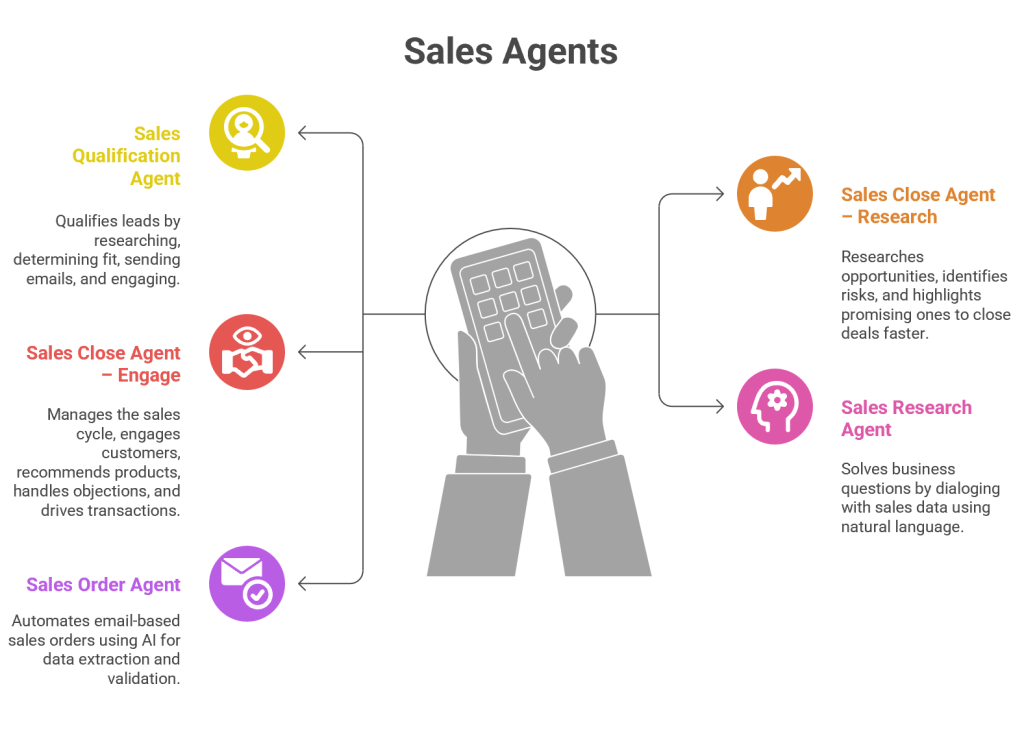
Customer service has evolved from being a reactive support function into a proactive, AI-driven engagement hub. Microsoft’s Dynamics 365 Customer Service Autonomous Agents represent the next leap in this journey. These agents are designed to autonomously handle repetitive tasks, discover customer intents, generate knowledge, and evaluate quality—all while freeing human agents to focus on complex, empathy-driven interactions.

1. Customer Intent Agent

Purpose

The Customer Intent Agent uses generative AI to autonomously discover customer intents by analyzing historical and ongoing cases, conversations, and interactions. Intents are essentially the “reason” behind a customer’s contact—such as resetting a password, checking an order status, or reporting a service outage.

How It Works

  • Data Mining: The agent scans past cases, chat transcripts, and emails to identify recurring themes.
  • Intent Discovery: It clusters similar issues into “intents” using natural language processing (NLP).
  • Knowledge Recommendations: Once an intent is identified, the agent suggests the most relevant knowledge articles to resolve the issue.
  • Continuous Learning: As new cases emerge, the agent adapts and refines its intent library.

Business Value

  • Reduces manual effort in categorizing cases.
  • Improves self-service portals by surfacing the right FAQs.
  • Enhances assisted service by guiding human agents toward faster resolutions.
  • Provides insights into emerging customer needs (e.g., a sudden spike in billing queries).

Example

Imagine a telecom company receiving thousands of queries daily. The Customer Intent Agent identifies that 40% of queries relate to “SIM card activation.” It then recommends a knowledge article and updates the chatbot to handle this intent autonomously, reducing call center load.

2. Customer Intent Agent for Voice

Purpose

While the standard Customer Intent Agent focuses on text-based interactions, the Voice variant is tailored for contact centers handling phone calls.

How It Works

  • Speech-to-Text Conversion: Converts live voice conversations into text.
  • Intent Recognition: Uses generative AI to detect customer intent in real time.
  • Guided Conversations: Suggests follow-up questions to agents, helping them steer the call effectively.
  • Real-Time Solutions: Provides tailored solutions during the call, reducing average handling time (AHT).

Business Value

  • Enhances voice-based customer service, which remains dominant in many industries.
  • Improves agent confidence by suggesting next-best actions during live calls.
  • Reduces call duration and increases first-call resolution (FCR).

Example

In a bank’s contact center, a customer calls saying, “I can’t access my account.” The agent dashboard instantly shows the intent as “Login Issue” and suggests asking: “Are you using the mobile app or web portal?” It then recommends a troubleshooting script, speeding up resolution.

3. Case Management Agent

Purpose

The Case Management Agent automates the entire case lifecycle—from creation to closure. Traditionally, service representatives spend significant time manually filling case details, updating statuses, and closing tickets. This agent eliminates that overhead.

How It Works

  • Case Creation: Automatically generates cases from emails, chats, or voice transcripts.
  • Case Updates: Populates fields like category, priority, and SLA deadlines.
  • Resolution & Closure: Suggests resolutions based on knowledge articles and closes cases once resolved.
  • Customization: Administrators can configure rules to tailor the agent’s behavior to organizational needs.

Business Value

  • Saves time for service representatives.
  • Ensures consistency in case handling.
  • Improves SLA compliance by automating escalations.
  • Reduces human error in case documentation.

Example

In an e-commerce company, when a customer emails “My package hasn’t arrived,” the Case Management Agent automatically creates a case, tags it as “Delivery Delay,” sets priority, and routes it to the logistics department. Once resolved, it closes the case and notifies the customer.

4. Customer Knowledge Management Agent

Purpose

Knowledge is the backbone of customer service. The Customer Knowledge Management Agent ensures that knowledge bases remain up-to-date, accurate, and compliant.

How It Works

  • Knowledge Extraction: Analyzes closed cases to identify gaps in existing knowledge articles.
  • Knowledge Creation: Drafts new articles using generative AI.
  • Compliance Checks: Ensures articles meet organizational and regulatory standards.
  • Real-Time Updates: Continuously refines knowledge bases as new cases emerge.

Business Value

  • Improves self-service by keeping FAQs relevant.
  • Enhances agent productivity by providing contextual knowledge suggestions.
  • Reduces repetitive queries by empowering customers with accurate information.
  • Ensures compliance in industries like healthcare and finance.

Example

A healthcare provider closes multiple cases related to “insurance claim submission.” The agent notices no existing article covers this process. It drafts a new knowledge article, reviews compliance, and publishes it—empowering both customers and agents.

5. Quality Evaluation Agent

Purpose

The Quality Evaluation Agent autonomously assesses customer interactions for quality and compliance. Supervisors traditionally spend hours manually reviewing calls and chats; this agent automates that process.

How It Works

  • Evaluation Framework: Supervisors define criteria (e.g., politeness, accuracy, compliance).
  • AI-Assisted Assessments: The agent evaluates cases and conversations against these criteria.
  • Feedback Loop: Provides insights into agent performance and customer satisfaction.
  • Continuous Improvement: Suggests training modules or process changes based on evaluation results.

Business Value

  • Ensures consistent service quality across agents.
  • Identifies training needs proactively.
  • Improves compliance with regulatory standards.
  • Enhances customer satisfaction through better service delivery.

Example

In a financial services firm, the agent evaluates 1,000 chat transcripts overnight. It flags 50 cases where agents failed to verify customer identity properly, alerting supervisors to potential compliance risks.

Synergy Between Agents

While each agent has a distinct role, their combined power transforms customer service:

  • Customer Intent Agents identify why customers reach out.
  • Case Management Agent automates case handling.
  • Knowledge Management Agent ensures information is accurate.
  • Quality Evaluation Agent maintains service excellence.

Together, they create a self-optimizing, autonomous customer service ecosystem.

Strategic Impact

  • Operational Efficiency: Reduces manual workload.
  • Customer Satisfaction: Improves resolution speed and accuracy.
  • Compliance: Ensures adherence to regulations.
  • Scalability: Handles large volumes of interactions seamlessly.