Introduction
The Microsoft Ignite 2025 Book of News marks a pivotal moment in the evolution of enterprise technology, with Microsoft unveiling a sweeping array of innovations that redefine how organizations build, govern, and scale AI-driven solutions. This year’s announcements center on the maturation of the agent ecosystem, the formalization of intelligence layers such as Work IQ, Fabric IQ, and Foundry IQ, and a robust commitment to security, governance, and interoperability across the Microsoft Cloud and partner platforms. The following report provides a comprehensive, in-depth analysis of the most significant highlights from Ignite 2025, focusing on practical enterprise applications and the specific benefits these advancements deliver to businesses and IT teams. Each section details a major announcement or theme, illustrates its real-world use, and explains its value proposition for organizations navigating the next era of digital transformation.
1. Microsoft Agent 365: The Control Plane for AI Agents
Overview
Microsoft Agent 365 is introduced as the unified control plane for managing AI agents across the enterprise. It extends the familiar infrastructure used for user management to the rapidly growing population of AI agents, providing comprehensive tools for registry, access control, visualization, interoperability, and security. Agent 365 is designed to support agents built on Microsoft platforms, open-source frameworks, and third-party ecosystems, ensuring organizations can confidently deploy, observe, and govern agents at scale.
Practical Enterprise Example
Scenario: A global financial services firm deploys dozens of AI agents to automate customer onboarding, fraud detection, and compliance monitoring. Using Agent 365, the IT team registers all agents—whether developed in-house or sourced from partners—assigns unique Entra Agent IDs, and applies conditional access policies. The security team leverages the visualization dashboard to monitor agent interactions with sensitive data, while compliance officers audit agent activity logs for regulatory reporting.
Business Value
- Unified Governance: Agent 365 provides a single pane of glass for managing the entire agent fleet, reducing the risk of shadow agents and ensuring all agents adhere to organizational policies.
- Security and Compliance: By integrating with Microsoft Defender, Entra, and Purview, Agent 365 enforces least-privilege access, detects threats, and maintains audit trails, supporting regulatory compliance.
- Operational Efficiency: Centralized observability and lifecycle management streamline agent onboarding, monitoring, and retirement, minimizing administrative overhead and accelerating innovation.
2. Entra Agent ID and Agent Identity Management
Overview
Microsoft Entra Agent ID introduces first-class identity constructs for AI agents, bringing Zero Trust principles to autonomous systems. The Entra Agent Registry acts as a centralized inventory and metadata repository for all agents, supporting lifecycle management, access control, and policy enforcement. This ensures that every agent—regardless of origin—can be discovered, governed, and secured in line with enterprise standards.
Practical Enterprise Example
Scenario: A healthcare provider integrates AI agents into its electronic health record (EHR) system to automate patient data retrieval and appointment scheduling. Each agent is assigned an Entra Agent ID, registered in the Agent Registry, and granted access only to the necessary patient data. The IT team uses Entra’s lifecycle workflows to automatically deactivate agents when they are no longer needed, preventing orphaned or overprivileged agents.
Business Value
- Zero Trust for Agents: Entra Agent ID enforces identity assurance, conditional access, and risk-based policies for agents, mirroring protections for human users.
- Lifecycle Governance: Automated workflows ensure agents are created, sponsored, and decommissioned according to policy, reducing the risk of unauthorized access or lingering credentials.
- Auditability and Compliance: The Agent Registry provides a single source of truth for agent identities, supporting audit, discovery, and compliance reporting across hybrid and multi-cloud environments.
3. The Expanding Agent Ecosystem: Sales Development Agent and Role-Specific Agents
Overview
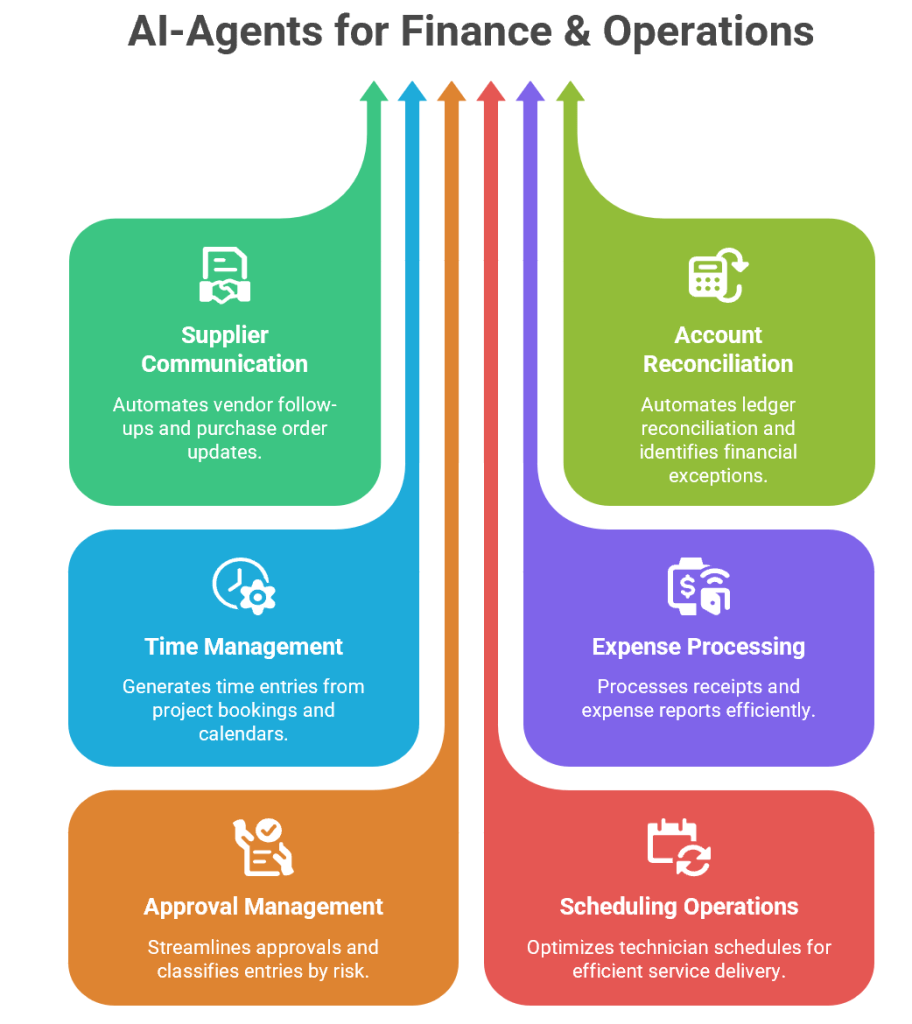
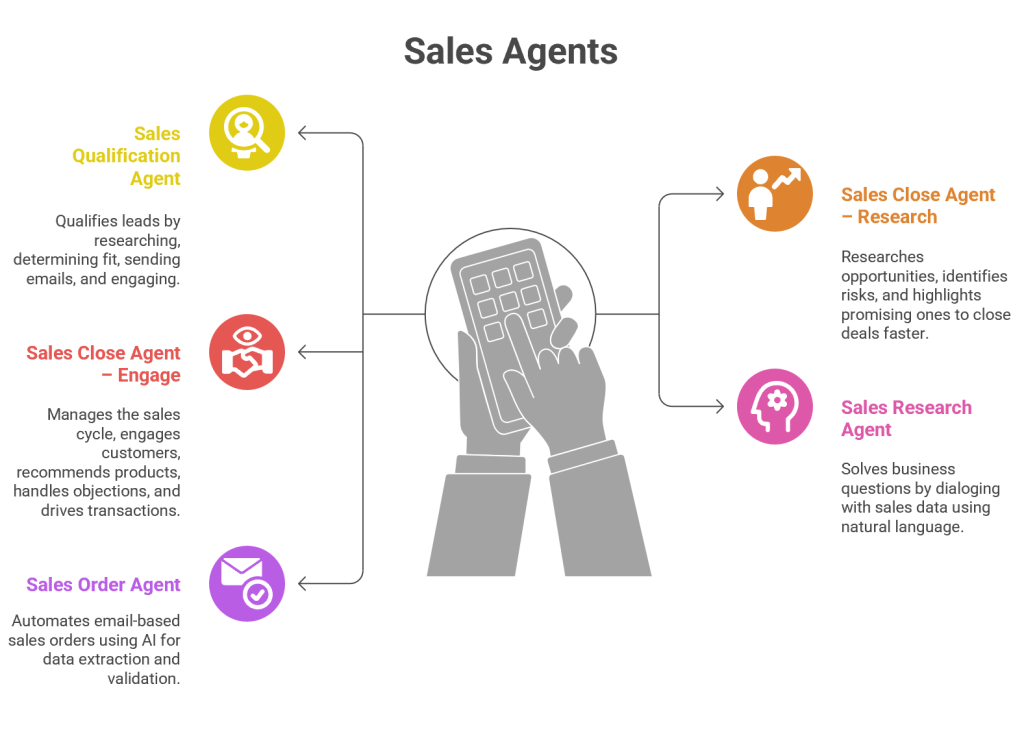
Microsoft’s agent ecosystem expands with the introduction of specialized agents such as the Sales Development Agent, Workforce Insights Agent, People Agent, Learning Agent, Teams Admin Agent, and SharePoint Admin Agent. These agents are designed to automate domain-specific tasks, enhance productivity, and deliver actionable insights across business functions.
Practical Enterprise Example
Sales Development Agent:
A B2B software company deploys the Sales Development Agent to autonomously research prospects, qualify leads, and initiate personalized outreach. The agent integrates with Dynamics 365 and Salesforce, ensuring no lead is left behind and handing off high-potential opportunities to human sellers. Microsoft’s own sales team reported a 15.1% increase in lead-to-opportunity conversion after adopting this agent.
Workforce Insights Agent:
An HR department uses the Workforce Insights Agent to analyze organizational composition, identify skill gaps, and recommend workforce planning strategies. Delegates can access dynamic reports filtered by role, location, or tenure, supporting data-driven decisions for talent management and upskilling.
Business Value
- Scalability: Agents like the Sales Development Agent operate 24/7, scaling outreach and engagement without increasing headcount.
- Data-Driven Decisions: Workforce Insights and People Agents provide leaders with real-time analytics, enabling proactive workforce planning and targeted learning interventions.
- Operational Consistency: Admin agents automate routine IT tasks, ensuring uniform policy application, reducing manual errors, and freeing up staff for higher-value work.
4. Agents in Microsoft Teams and Multi-Vendor Interoperability via Model Context Protocol (MCP)
Overview
Agents in Microsoft Teams channels now support orchestration with third-party apps and agents through the Model Context Protocol (MCP). This enables seamless, cross-platform workflows where agents can interact with tools like Jira, Asana, and GitHub, pulling data, creating tasks, and coordinating actions—all within Teams.
Practical Enterprise Example
Scenario: A product launch team uses a Teams channel agent to monitor project risks. The agent queries Jira for open issues, summarizes blockers, and schedules a follow-up meeting with stakeholders—all triggered by a single conversational prompt in Teams. The agent can also create Asana tasks or fetch GitHub pull request statuses, reducing context switching and manual coordination.
Business Value
- Enhanced Collaboration: Agents orchestrate multi-step workflows across disparate systems, enabling teams to focus on outcomes rather than tool management.
- Reduced Context Switching: By integrating third-party apps into Teams, agents minimize the need to toggle between platforms, improving productivity and reducing errors.
- Interoperability: MCP standardizes agent-to-app communication, future-proofing investments and supporting a diverse ecosystem of tools and vendors.
5. Work IQ, Fabric IQ, and Foundry IQ: The Intelligence Layers
Overview
Microsoft formalizes its intelligence stack with Work IQ, Fabric IQ, and Foundry IQ—three complementary layers that provide context, reasoning, and knowledge grounding for agents and Copilot experiences. Work IQ leverages organizational data and memory, Fabric IQ adds semantic understanding to the data estate, and Foundry IQ unifies knowledge retrieval across platforms.
Practical Enterprise Example
Scenario: A multinational retailer deploys a custom supply chain agent built in Copilot Studio. The agent uses Work IQ to understand internal workflows, Fabric IQ to reason over sales and inventory data, and Foundry IQ to access product documentation and external market trends. When a supply chain disruption occurs, the agent synthesizes insights from all three layers to recommend optimal inventory reallocation and supplier engagement strategies.
Business Value
- Contextual Intelligence: Agents act with a deep understanding of organizational processes, data relationships, and business semantics, reducing hallucinations and improving decision quality.
- Unified Knowledge Access: Foundry IQ enables agents to query a single knowledge base spanning Microsoft 365, Fabric, SharePoint, and external sources, streamlining development and enhancing accuracy.
- Governance and Security: All IQ layers respect user permissions, sensitivity labels, and compliance policies, ensuring responsible AI adoption at scale.
6. Microsoft Agent Factory and Copilot Studio: Accelerating Agent Development
Overview
Microsoft Agent Factory is a new program designed to help organizations move from experimentation to execution with AI agents. It offers a unified, metered licensing model (Agent Commit Units), hands-on support from Forward Deployed Engineers, and tailored training to boost AI fluency. Copilot Studio enhancements include agent evaluations, real-time monitoring, and integration with Entra Agent ID for secure, enterprise-grade agent development.
Practical Enterprise Example
Scenario: A manufacturing company wants to automate quality control and predictive maintenance. Using Agent Factory, the IT team rapidly prototypes agents in Copilot Studio, leverages Forward Deployed Engineers for best practices, and deploys agents to production with unified governance. The company uses the metered plan to flexibly allocate resources across Copilot Studio and Foundry, optimizing costs and accelerating time to value.
Business Value
- Simplified Procurement: The Pre-Purchase Plan consolidates licensing across agent platforms, reducing administrative complexity and enabling predictable budgeting.
- Faster Innovation: Access to expert engineers and role-based training accelerates agent development, deployment, and adoption.
- Enterprise-Ready Agents: Built-in evaluations, observability, and identity management ensure agents meet security, compliance, and performance standards from day one.
7. Observability, Governance, and Security for Agents
Overview
Observability is now a first-class requirement for AI agents. Microsoft Agent 365 Observability, built on OpenTelemetry, provides end-to-end telemetry, centralized monitoring, and integration with Defender and Purview for security and compliance. Foundry Control Plane extends these capabilities to developers, offering fleetwide visibility, behavioral guardrails, and real-time policy enforcement.
Practical Enterprise Example
Scenario: An insurance company deploys a suite of claims processing agents. Using Agent 365 Observability, IT and security teams monitor agent invocations, tool usage, and exceptions in real time. Any anomalous behavior—such as unexpected data access or tool calls—is flagged, and automated remediation actions are triggered via Defender integration. Compliance teams use Purview to audit agent interactions with sensitive customer data.
Business Value
- Risk Reduction: Continuous monitoring and automated threat detection minimize the risk of agent compromise, data leaks, or policy violations.
- Operational Transparency: Centralized dashboards and audit logs provide clear visibility into agent activity, supporting incident response and regulatory audits.
- Lifecycle Management: Real-time observability enables proactive tuning, performance optimization, and safe decommissioning of agents.
8. Productivity Enhancements Across Microsoft 365 Copilot and Agents
Overview
Microsoft 365 Copilot and its agents receive significant upgrades, including dedicated Word, Excel, and PowerPoint Agents, expanded Copilot Chat for non-Copilot license users, and enhanced voice and collaboration features. Work IQ powers more personalized, context-aware experiences, while Copilot Notebooks and Pages streamline content creation and sharing.
Practical Enterprise Example
Scenario: A consulting firm’s employees use Copilot Chat in Outlook to triage their inboxes, schedule meetings, and surface insights across emails and calendars. In Word and PowerPoint, Agent Mode enables iterative co-creation of reports and presentations, grounded in organizational knowledge and web data. Even users without a Copilot license benefit from content-aware chat and agent-driven document generation.
Business Value
- Democratized AI Access: Copilot Chat and Agent Mode bring advanced AI capabilities to all users, regardless of licensing tier, increasing productivity across the organization.
- Personalized Assistance: Work IQ ensures Copilot and agents understand individual work patterns, delivering tailored suggestions and automating routine tasks.
- Seamless Collaboration: Features like Copilot Notebooks, Pages, and SharePoint integration enable teams to co-author, iterate, and share content effortlessly.
9. Azure Governance Updates: Service Groups and Azure Policy
Overview
Azure introduces Service Groups, a flexible resource grouping mechanism that supports cross-subscription management, nested hierarchies, and low-privilege administration. Azure Policy enhancements include identity-based exemptions and a refreshed UX, making it easier to manage compliance, exemptions, and remediations across complex environments.
Practical Enterprise Example
Scenario: A multinational conglomerate manages hundreds of Azure subscriptions across business units. Using Service Groups, the cloud operations team creates logical groupings for cost centers, products, and organizational structures, enabling targeted monitoring and analytics. Identity-based exemptions allow admins to grant temporary policy exceptions to approved service principals without overexposing critical resources.
Business Value
- Operational Agility: Service Groups provide dynamic, cross-cutting views of resources, supporting flexible management and monitoring without restructuring the environment.
- Granular Compliance: Identity-based exemptions and improved policy management reduce the risk of over-permission and streamline compliance workflows.
- Scalability: Nested hierarchies and aggregated data views enable organizations to scale governance practices as their cloud footprint grows.
10. Security Innovations: Defender, Entra, and Purview for Agents
Overview
Microsoft delivers a suite of security innovations targeting the unique risks of agentic AI. Defender for Cloud and GitHub integration provides end-to-end protection across the app lifecycle. Unified posture management and threat protection for AI agents are now available, with Entra Agent ID securing agent identities and access. Purview extends data security and compliance to agents, supporting observability, DLP, and insider risk management.
Practical Enterprise Example
Scenario: A pharmaceutical company develops custom agents for R&D data analysis and regulatory submissions. Defender for Cloud monitors agent code and runtime behavior, correlating security signals with GitHub repositories. Entra Agent ID ensures only authorized agents access sensitive datasets, while Purview DLP policies block agents from processing or sharing confidential information outside approved channels.
Business Value
- Comprehensive Protection: Integrated security across code, runtime, and data ensures agents are protected from development to deployment.
- Proactive Risk Management: AI-powered threat detection, posture management, and automated remediation reduce the risk of breaches and compliance violations.
- Consistent Policy Enforcement: Purview extends existing security and governance frameworks to agents, delivering unified protection across human and digital workforces.
11. Multi-Vendor Interoperability and Partner Ecosystem
Overview
Microsoft’s commitment to interoperability is evident in its support for MCP, open standards, and a vibrant partner ecosystem. The Microsoft Marketplace now features the industry’s largest catalog of AI apps and agents, enabling organizations to blend Microsoft and third-party solutions. Integrations with platforms like Palo Alto Networks and Zenity extend security and governance across multi-cloud and hybrid environments.
Practical Enterprise Example
Scenario: A manufacturing enterprise leverages Microsoft’s partner ecosystem to deploy Siemens’ AI-powered digital thread solutions, SymphonyAI’s operational analytics, and Hexagon’s robotics—all integrated with Microsoft 365 Copilot and Teams. The IT team manages these solutions through Agent 365 and Foundry Control Plane, ensuring consistent governance and security across Microsoft and partner platforms.
Business Value
- Best-of-Breed Solutions: Organizations can select and integrate the most effective tools from Microsoft and partners, accelerating innovation and time to value.
- Unified Management: Centralized governance and observability extend across the entire ecosystem, reducing complexity and risk.
- Scalable Collaboration: The Marketplace and MCP support rapid deployment, scaling, and management of multi-vendor solutions, empowering organizations to adapt to evolving business needs.
12. Real-World Enterprise Applications by Industry
Manufacturing
Use Case: Predictive maintenance agents ingest sensor data, detect anomalies, and forecast equipment failures, automatically notifying planners and optimizing maintenance schedules. Companies like Husqvarna and DMG Mori have reported significant improvements in product quality, reliability, and operational efficiency by integrating agentic AI with Azure and partner solutions.
Benefit: Reduced unplanned downtime, lower maintenance costs, and increased equipment lifespan.
Financial Services
Use Case: AI agents automate compliance monitoring, fraud detection, and customer onboarding, leveraging Work IQ and Purview for context-aware reasoning and data protection.
Benefit: Enhanced regulatory compliance, faster customer service, and reduced operational risk.
Healthcare
Use Case: Agents with Entra Agent ID manage access to patient records, automate appointment scheduling, and support clinical decision-making, all while maintaining strict privacy and audit controls.
Benefit: Improved patient outcomes, streamlined operations, and robust data security.
Professional Services
Use Case: Consulting firms use Copilot Chat, Agent Mode, and Notebooks to automate document creation, meeting preparation, and knowledge management, increasing billable hours and client satisfaction.
Benefit: Higher productivity, better collaboration, and faster project delivery.
13. Cost, Licensing, and Deployment Considerations
Overview
Microsoft introduces flexible, metered licensing models (Agent Commit Units) and new offerings like Microsoft 365 Copilot Business for SMBs. The Agent Factory Pre-Purchase Plan consolidates procurement across Copilot Studio and Foundry, while deployment tools and training programs support rapid adoption and change management.
Practical Enterprise Example
Scenario: An SMB with fewer than 300 users adopts Microsoft 365 Copilot Business at $21 per user/month, automating everyday tasks and scaling operations without complexity. A large enterprise uses the Agent Factory Pre-Purchase Plan to allocate resources dynamically across multiple agent projects, optimizing spend and accelerating deployment.
Business Value
- Predictable Costs: Metered plans and SMB offerings provide transparency and flexibility, aligning investment with usage and business growth.
- Simplified Deployment: Unified procurement and deployment tools reduce administrative burden and speed up time to value.
- Scalable Adoption: Training, change management, and upskilling programs ensure workforce readiness and maximize ROI on AI investments.
14. Training, Change Management, and Upskilling for Agent Adoption
Overview
Microsoft emphasizes the importance of workforce enablement, offering tailored, role-based training as part of Agent Factory and Copilot Studio programs. Forward Deployed Engineers and skilling experts collaborate with organizations to map learning plans, deliver instructor-led sessions, and build AI fluency across teams.
Practical Enterprise Example
Scenario: A retail organization embarks on an AI transformation journey, enrolling business leaders, IT staff, and frontline workers in customized training programs. The company leverages hands-on labs, webinars, and co-innovation workshops to build confidence and accelerate agent adoption.
Business Value
- Accelerated Adoption: Comprehensive training reduces resistance to change and empowers employees to leverage AI agents effectively.
- Sustained Innovation: Ongoing upskilling ensures the organization can continuously evolve its agent ecosystem and maintain a competitive edge.
- Stronger ROI: Well-trained teams maximize the value of AI investments, driving measurable improvements in productivity, efficiency, and business outcomes.
Conclusion
Microsoft Ignite 2025 signals a new era for enterprise AI, where agents are not just assistants but dynamic collaborators embedded across every workflow. The convergence of Agent 365, Entra Agent ID, Work IQ, Fabric IQ, Foundry IQ, and a robust security and governance framework empowers organizations to innovate with confidence, scale responsibly, and unlock unprecedented value from their data and processes. By embracing these advancements, businesses and IT teams can transform operations, enhance productivity, and secure their digital future in an increasingly agentic world.
Key Takeaways:
- Agent 365 and Entra Agent ID deliver unified governance, security, and lifecycle management for AI agents, reducing risk and operational complexity.
- Role-specific agents (Sales, Workforce Insights, Admin) automate domain tasks, scale capacity, and provide actionable insights, driving measurable business impact.
- MCP and multi-vendor interoperability enable seamless, cross-platform workflows, future-proofing investments and supporting a diverse ecosystem.
- Work IQ, Fabric IQ, and Foundry IQ provide the intelligence backbone for context-aware, reliable, and governed AI solutions.
- Agent Factory and Copilot Studio accelerate agent development, deployment, and adoption, supported by flexible licensing and comprehensive training.
- Security, observability, and compliance are embedded at every layer, ensuring responsible AI adoption and regulatory alignment.
- Real-world applications across industries demonstrate tangible benefits in efficiency, quality, compliance, and innovation.
By leveraging the innovations announced at Ignite 2025, organizations can confidently navigate the frontier of AI-powered transformation, positioning themselves as leaders in the emerging agentic economy.

 GM Dynamics & Agentic AI Consulting